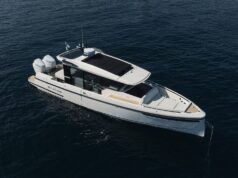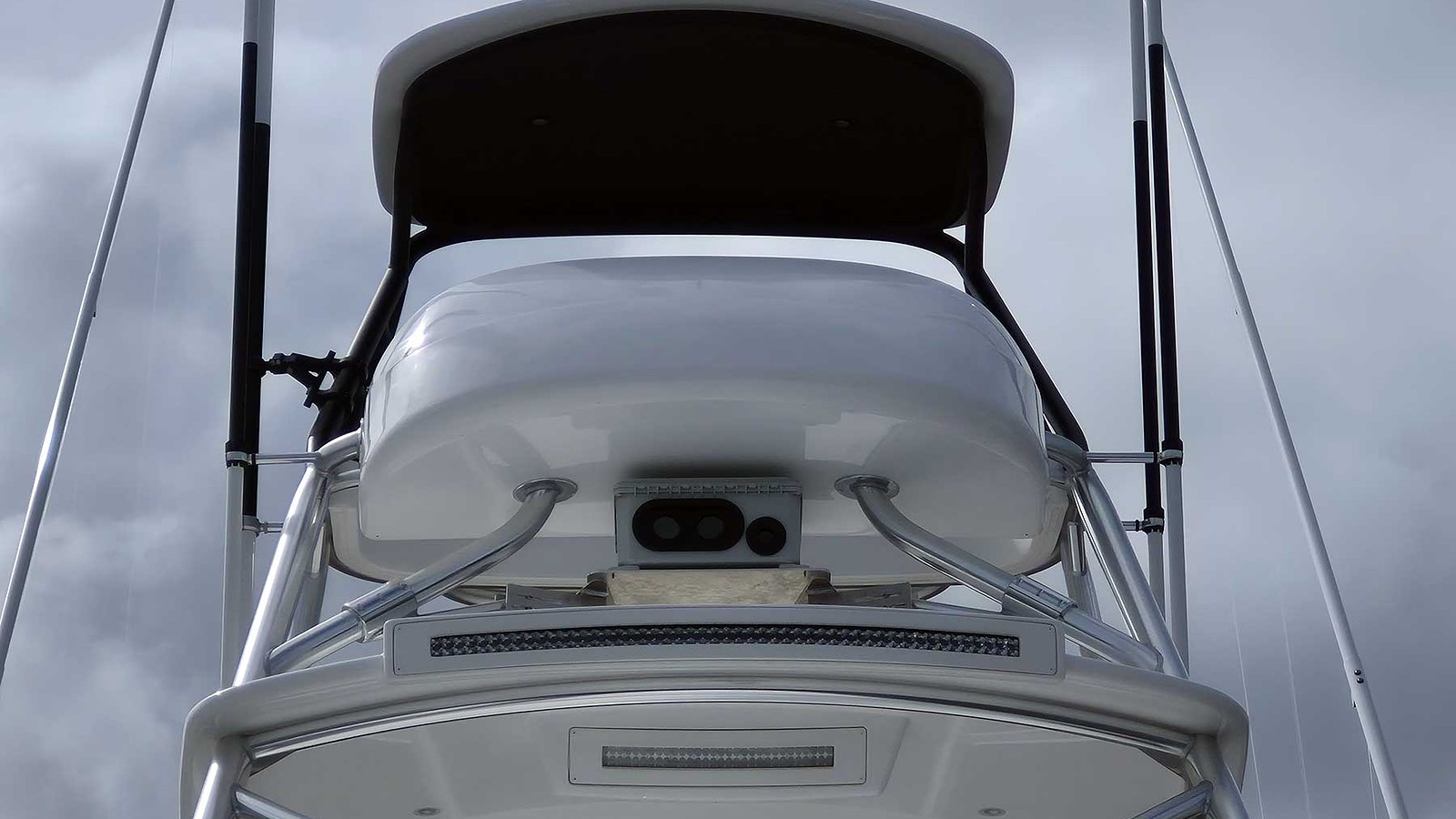
Viking Yacht Company is testing WhaleSpotter, a thermal-camera whale detection system, on its new Viking 70 Convertible demo boat. It’s a big American sportfisherman, but with orcas still damaging yacht rudders around Iberia, many sailors will be asking what we are: could this help us?
How WhaleSpotter works on the Viking 70
Viking’s subsidiary Atlantic Marine Electronics fitted a single unit, thermal camera plus processing computer, under the tuna tower helm station on a removable mount. Software separates whales from waves and spray; a tablet at the helm shows the thermal image with an estimated distance and bearing, backed by an audible alarm.
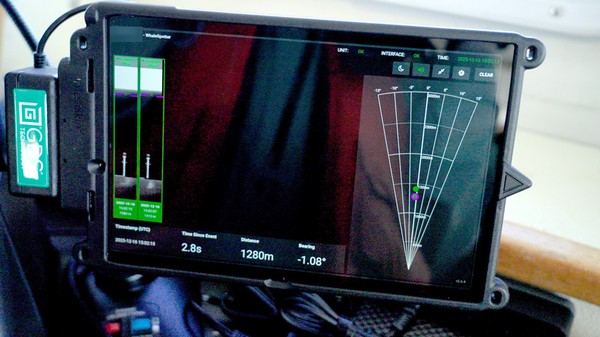
WhaleSpotter quotes reliable detection at 2 to 3 nautical miles, day or night, depending on camera height and whale size. Its website goes further, to about 7 km (4 nm), and says each detection is confirmed by a human expert within seconds. Those are the company’s figures, not ours, and the 70’s delivery trip from New Jersey to Florida detected no whales, so there’s no on-board result yet. Viking’s interest is partly regulatory: it wants such technology recognised as NOAA reviews the 2008 right whale speed rule (10 knots for most boats of 65 ft or more in seasonal East Coast zones).
WhaleSpotter and the orca question
Since 2020, orcas off Spain, Portugal and the Strait of Gibraltar have been interacting with boats, mostly sailing yachts, according to Portugal’s ICNF, and the Portuguese Maritime Authority warns rudder strikes can break the rudder. Spain’s Transport Ministry advises avoiding mapped high-risk zones between the Gulf of Cádiz and the Strait and off Galicia, especially from April to October, and, during an interaction, not stopping but heading for shallower water. The protocol backed by ICNF and GT Orca Atlántica instead says stop and let the helm run free, or motor astern. The Cruising Association’s orca guidance sets out both.
Earlier warning helps whichever advice you follow. But neither Viking nor WhaleSpotter says the system detects orcas or smaller cetaceans such as dolphins; its pages talk about whales and their blows. The nearest clue is a shore station in Puget Sound run by Quiet Sound, with WhaleSpotter as technology provider: from a 30 m tower, Quiet Sound reports tracking killer whales, with a mean detection range of 1.5 to 1.7 km. That’s a fixed, high site, not a moving yacht. Our open questions for WhaleSpotter: does the boat system alarm on orcas, at what range from what height, and does expert verification need a data link offshore?
Fitting WhaleSpotter to a sailing yacht
WhaleSpotter says installation takes under an hour with four screws and one cable for power and network, and asks for at least 15 ft of mounting height. On a sailing yacht a stern arch won’t work for a forward-looking camera, because the mast, rigging, sprayhood and sails are in the way. To see ahead without being blocked by the sails, the camera has to sit above the foresails or at the masthead. That means weight aloft, a cable run inside the mast and a power budget to plan. There’s no published price or power draw, and customers are mostly ships, ports and offshore construction. We’d like to see a lighter mast-mount version for cruisers.
A sailing-focused alternative: SEA.AI
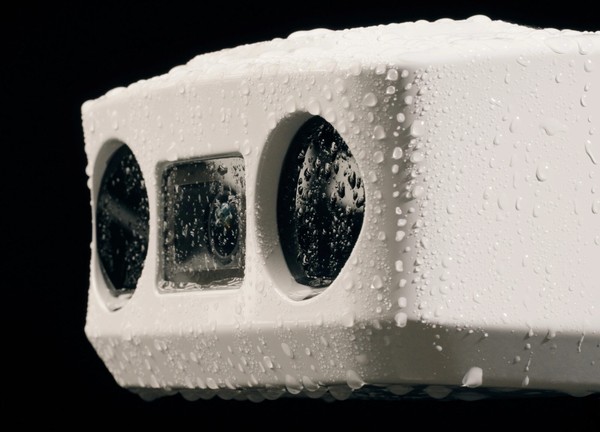
SEA.AI (formerly OSCAR) builds thermal and colour camera detection for yachts, including Competition for racing yachts and Watchkeeper, which replaces the discontinued Offshore. SEA.AI says it classifies whales and other marine mammals when part of the animal is visible at the surface. Its thermal model retrain covering whales came in software 4.1 (June 2026) for Sentry and Watchkeeper; 4.4 followed on 13 October. It publishes no whale detection range, and its new WeWhale partnership is still gathering Iberian orca data for training.
Our take
Whale encounters aren’t only an offshore problem. A boat can hit a whale, or, as with the Iberian orcas, the animals can go for the boat, often in coastal waters. Along the Spanish and Portuguese west coasts, the Cruising Association notes a significantly lower risk of orca attacks in less than 20 m of water, and Spanish authorities advise staying as close to the coast as is safely possible. A tireless extra lookout is appealing. Before anyone relies on WhaleSpotter, we want independent results, a straight answer on orcas and a chartplotter feed rather than another tablet. Viking will show the system at the Fort Lauderdale International Boat Show, 28 October to 1 November.
Sources: Viking Yacht Company press release, 19 October 2026 (via Trade Only Today); WhaleSpotter; Quiet Sound; Spanish Ministry of Transport; Autoridade Marítima Nacional; ICNF; GT Orca Atlántica; Cruising Association; SEA.AI.
Header image courtesy Viking Yachts